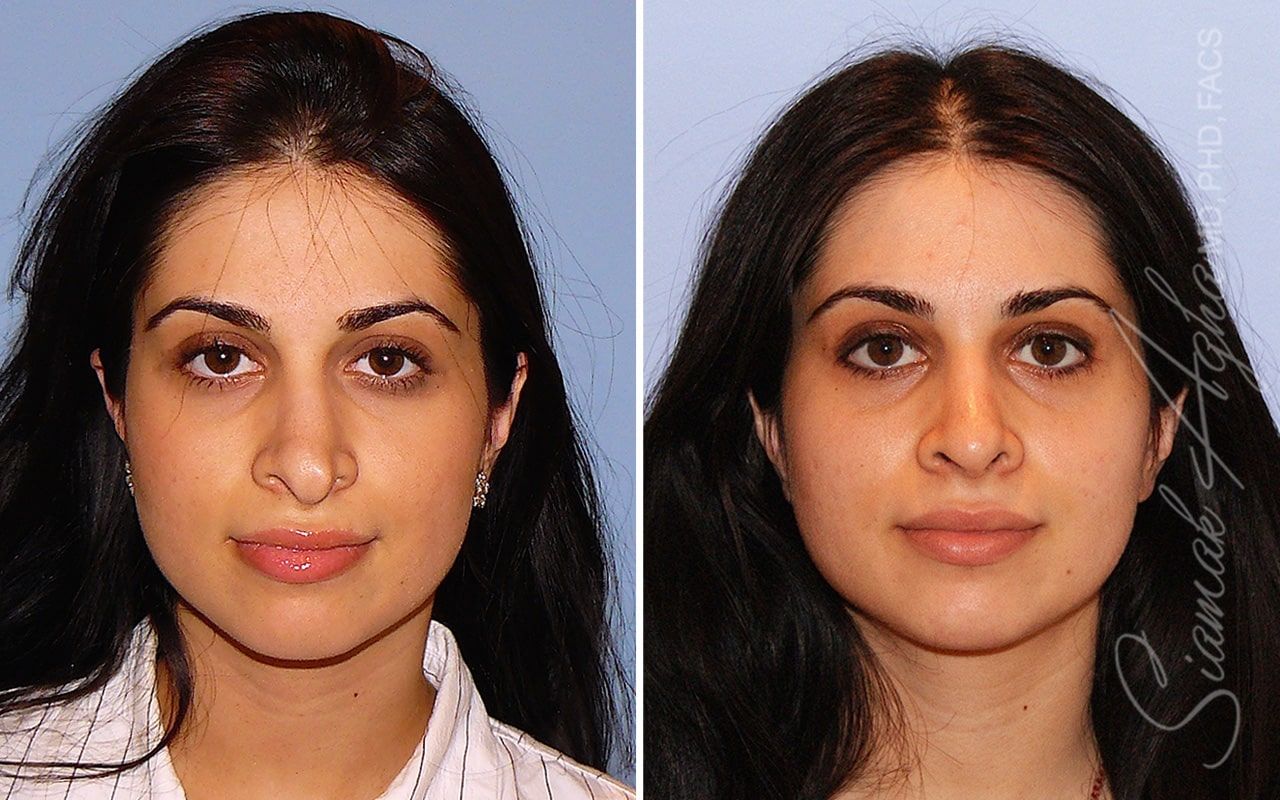


The nose plays a central role in facial harmony, so an unsatisfactory rhinoplasty result can be especially noticeable and discouraging. Some patients may be left with an irregular bridge, an overdone or poorly supported tip, visible asymmetry, or a nose that no longer complements the rest of their features. Others may develop new or persistent breathing difficulties after surgery.
Revision rhinoplasty is performed to improve concerns caused by a previous nasal procedure while restoring a more natural balance between appearance and function. In some cases, only a limited refinement is needed. More complex concerns may require rebuilding areas of the nose that have been weakened, over-resected, or altered by scar tissue.
Because the original nasal cartilage may no longer provide enough support, revision surgery sometimes requires cartilage taken from the patient’s ear or rib. This additional structure can help strengthen the nose, improve airflow, and create smoother, more stable contours.
At The One Plastic Surgery Center in Newport Beach, Dr. Siamak Agha approaches revision rhinoplasty with careful attention to nasal anatomy, facial proportions, and the changes created by the previous surgery.
Continue reading to learn when revision rhinoplasty may be appropriate, how the procedure is performed, and what to expect from treatment and recovery.
1 of 1
If you are unsatisfied with your nose’s appearance after a previous rhinoplasty, a revision procedure may provide you with a second chance to achieve your desired results.
You are considered a good candidate for revision rhinoplasty if you have a positive outlook and realistic expectations about your surgery.
The most common problems encountered during revision rhinoplasty include:
Some patients require minimal contouring of the nasal bridge to produce their desired results. But most patients evaluated for revision rhinoplasty require complete reconstruction of the nasal bridge, septum, and/or nasal tip. This usually involves grafting material from outside the nose, including ear and/or rib cartilage.
In some cases, Dr. Agha can use advanced techniques to utilize remaining grafting material from the back of the septum for revision rhinoplasty. This will eliminate the need to use donor cartilage and enhance recovery. Revision rhinoplasty patients are often fearful of undergoing further procedures with significantly more prolonged recovery. After a thorough consultation, Dr. Agha will outline his strategy in clear terms to improve your nose’s form and function.


Please follow us @drsiamakagha to learn what makes Dr. Agha unique and special, learn from his educational podcasts and consults, and view precision surgery after surgery.